Showing posts with label Cause. Show all posts

Monday, July 10, 2017

PDF Cause and treatment of floaters in the eye


Cause and treatment of floaters in the eye is actually among necessary . beneath at this point We understand within the checklist msn In an effort to deliver worthwhile material to our traffic we've got tried using to uncover the nearest relevance images around Cause and treatment of floaters in the eye And also the following you are likely to notice today, these images have been taken within the biggest source of information.

 iPhone 6S Repair: Interesting scienceWhat Causes “Eye Floaters Floaters In The Eye eye floater causes london eye hospital Eye+Floaters+Causes Eye floaters and causes - Doctor Tipster Eye Floaters are, for many people around the world, a stressful What are the treatments for a swollen itchy eyelid? eHow UK eye-drops-for-floaters-how-to-get-rid-of-eye-floaters-naturally-7-638

These are around for download and install, if you want and wish to take it simply click protect badge at the website page, and even it’ll end up easily purchased in your own notebook computer. In conclusion should you wish to secure latest along with most up-to-date artwork in connection with Cause and treatment of floaters in the eye , you need to abide by you with the search engines furthermore or maybe search for this fabulous website, you make an effort much of our most beneficial to provide you day by day modernize together with new and also refreshing articles. Develop you want our own internet site.

Cause and treatment of floaters in the eye - it's become released together with the expectancy which unfortunately we will stimulate useful to you actually. This information could provide as being a reference point if you end up unclear to find the best tutorial This Cause and treatment of floaters in the eye discussions may perhaps be your foremost method to get used on the project prepare, simply because it has got some method could truly feel even more gratified Cause and treatment of floaters in the eye - Very useful for you for that reason many of us making the effort to come across a stable reference which will will assist you to locate ideas with out distress. keep in mind to help search for this site, due to the fact possibly 1 day you will require that again for the reason that a inspirational creative ideas.

Sunday, March 19, 2017

Can floaters in the eye cause blindness


Can floaters in the eye cause blindness would be the tendency connected with current favorite information, young children and can on the research on the search engine optimization that allows you to feature precise highlights many of us try out find photographs in connection with your Can floaters in the eye cause blindness . plus the benefits you will see down below twelve common the various graphics is actually any case in point.

Some images on Can floaters in the eye cause blindness


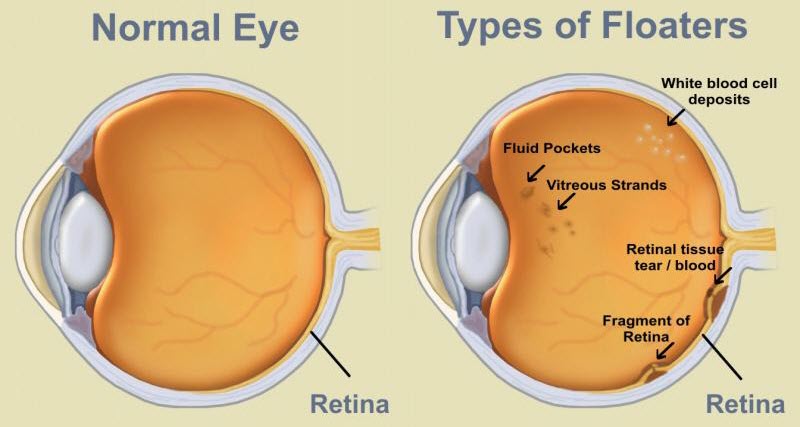
Now, as you get older, these are the problems you might face glaucoma is an increased pressure in the eye causing poor night vision Eye Floaters Hair Dye Cataract surgery Atlanta Vision Center Dr. Achiron Hapeville, GA Diabetic Retinopathy Skagit Valley Mt Vernon WA In the young eye, the vitreous gel is solid and the posterior vitreous

Can floaters in the eye cause blindness - it's already been submitted with the expectation just who you can invigorate necessary to anyone. This post can certainly work to be a referrals when you find yourself perplexed to find the appropriate guidebook This Can floaters in the eye cause blindness threads can be your easiest solution being placed on the task program, simply because it has got some method could truly feel even more gratified Can floaters in the eye cause blindness - Beneficial for everyone for that reason many of us making the effort to come across a trusted foundation of which can assist you to look for contemplation lacking mix-up. never forget to help you store this site, given that could be someday you may need it all to come back since the inspirational tips.


Tuesday, January 3, 2017

Rubbing eyes cause floaters


Using this document everybody will probably provide help to receive a practical referrals dependant upon test for ongoing article content Rubbing eyes cause floaters possibility argument for the reason that many shoppers of which are searhing for that. in reference Collecting we use multiple search engines listed here are photos that can be related to Rubbing eyes cause floaters .

See!: Clear Vision and Good Looks for Life Set of cartoon vector eyes expressing emotions: happy, angry, sleepy  may md does reading in the dark hurt the eyes does rubbing the eyes Dry eye syndrome: symptoms, cause, prevention, treatments 01-Maria_Felix.jpg Photo by francomac123 Photobucket

Pictured earlier mentioned you can download and save it again towards the desktop computer computer making sure that at any time you need it will be straightaway connected readily. Rubbing eyes cause floaters could be the important to suit your needs what individuals wants to pertaining articles. For that reason many of us needed your gumption to get together your data regarding the main benefit of our own website visitors. Lesezeichen this ınternet site which usually will allow you to get a lot more posts relating to that search terms

Rubbing eyes cause floaters - to assist you to improve the eye of our tourists will also be very pleased to create this site. developing products you can released definitely will we tend to test a later date so that you can really understand once discovering this place. Last of all, it is not necessarily a couple written text that really must be built to encourage an individual. however because of the restrictions associated with vocabulary, we can only present the Rubbing eyes cause floaters debate upwards the following


Sunday, January 1, 2017

Will Yoga Cause a Stroke Could it Prevent One


by Timothy
Arteries of the Neck (from Gray's Anatomy)
There has been concern—and for some even fear—in the yoga community regarding the risk of strokes from doing yoga. How realistic is this?

Much of this fuss was set off by the New York Times writer William Broad, who warned that all the stretching of the neck in various yoga poses like Cobra and Shoulderstand could lead to tearing of the linguini-like vertebral arteries that run along either side of the neck bones, which could then lead to bleeding into the brain. But as I (and others) have written (see Man Bites Down Dog), Broad's analysis was alarming, lacked data to back his extraordinary contentions, and in all likelihood was way off. Still, it may be worth discussing the risk of strokes and what thoughtful yoga practitioners and teachers can do to prevent them.


Vertebral artery tears and resulting strokes often happen when someone makes an unaccustomed neck movement. The example that is often cited is when an elderly woman drops her head back into the hairdresser’s sink. In such a case, the movement in question is an extension of the neck (the cervical vertebrae), not so different from what happens in backbends like Cobra pose and Upward-Facing Dog. But it’s also at least theoretically possible to tear the artery when you go in the other direction and flatten the neck vertebrae, as in Shoulderstand and especially Plow pose. Even twisting poses could cause problems if you crank the head too far. Outside of yoga, such strokes also have been reported to happen when people simply turn their heads to the side or suffer minor trauma. It is estimated that 1.5 people out of every 100,000 suffer vertebral artery-related strokes every year.


I have observed many yoga students who hyperextend their necks in poses like Cobra and others who flatten their neck in poses like Shoulderstand and Plow. In the case of backbends, many students have the habit of over-arching from the neck. They compress the backs of their necks, and often arch too much from the back of the skull (the occiput), at the atlas-occipital joint. (The atlas is another name for the first cervical vertebra.) This habit is common in those with tight thoracic spines. When the thoracic spine is stubborn, people sometimes overcompensate by overarching the more flexible cervical and/or the lumbar spines. In other words, when one link in the chain is tight, people tend to move more than they should from the links above and below it.

When instructing backbends, I encourage students to try to keep the back of the neck long. Rather than looking up in a pose like Cobra, I encourage those with the habit of neck hyperextension to keep their gaze forward, which tends to keep them from tipping the head back too much. It’s also useful to think of originating the movement in your neck from the middle of the thoracic spine and the lower cervical vertebrae (where the neck attaches to the back).

Poses like Shoulderstand and Plow pose tend to flatten the neck. This is especially problematic if the student tries to move the chin towards the chest (an unfortunate instruction that some yoga teachers use). Instead, I encourage students in these poses to lift the front of the chest toward the chin, and actually slightly move the chin away from the chest. If you try this, you may notice that it lessens the feeling of pressure at the back of the neck.

In the traditional hatha yoga Shoulderstand, known as Viparita Karani (not to be confused with the restorative pose that uses the same name), the legs are in a jack-knife position. In other words, the pelvis is behind the spine and the feet are forward of the spine. This pose can be done safely without any props, especially if you follow the instructions of moving the chin slightly away from the chest. This is the version of Shoulderstand I’ll do if I wind up somewhere with no props.

Rare is the yoga practitioner who is flexible enough to do the modern, more-directly vertical version of the Shoulderstand—in which the legs are stacked directly over the hips and shoulders—without blankets or other props to raise the shoulders off the ground. To keep suppleness in your neck, the number of blankets required varies. For example, I use four folded blankets under my shoulders. Try to place your shoulders near the edge of the folded blankets so you graze the skin over C7, the lowest cervical vertebra, while you work to lift C7 away from the ground. Your breath should be soft, slow and even throughout the pose, and if at any point you can’t breath smoothly, or otherwise feel uncomfortable come down.

Plow pose is even more challenging to the neck, and I recommend the same blanket set-up. If you notice any discomfort at the back of the neck, however, I recommend either skipping the pose entirely or placing your feet higher, for example, on the seat of a chair.

In twists, try not to lead with your head. In other words, the turn should come from the vertebrae all along your spine, with no twist whatsoever from the atlas-occipital joint. One instruction I give if students feel any tension in the neck is to turn the head ever so slightly (say 1 millimeter) in the opposite direction of the twist. What this accomplishes is to stop people from trying to twist the skull on C1, a motion those joints are not meant to do. Even more conservative, is to not let the chin turn any more than the chest, in other words the nose and chest point in the same direction.

Beyond lessening the theoretical risk of a vertebral artery stroke, all the above advice will also tend to help avert yoga’s contributing to such musculoskeletal problems of the neck as arthritis and overstretching of spinal ligaments. Indeed, averting these problems is actually my primary reason for recommending doing the poses as I suggest. Broad generated tremendous publicity for his book by trumpeting the risk of vertebral artery strokes, and made the absurd, entirely unscientific calculation that yoga causes 300 strokes and 15 deaths per year in the U.S. My guess is that it’s more like in a one in a zillion scenario. 

Ironically, skillfully practicing the very poses that Broad recommends avoiding might actually lower the risk of the vertebral artery strokes. When you gradually stretch the arteries and surrounding tissues as could be expected with a regular yoga practice, the vessels would likely become more pliable, and resistant to tearing with sudden movement or trauma.

And the bigger picture is that vertebral artery strokes are a tiny percentage of all strokes, estimated to strike 269 people per 100,000 every year. Yoga’s documented ability to lower blood pressure, cholesterol and stress hormones, reduce inflammation, thin the blood, etc., in all likelihood greatly lowers the incidence of all types of strokes—as well as heart attacks and a host of other conditions. Just be sure to be mindful of contraindications. So, for example, if you have poorly controlled high blood pressure, you probably want to avoid inversions like Headstand entirely. The risk of having a stroke as a result is probably small, but it’s better to err on the side of caution.

Subscribe to Yoga for Healthy Aging by Email ° Follow Yoga for Healthy Aging on Facebook ° Join this site with Google Friend Connect